

Bypass Shocks Are Position-Sensitive. Stop Tuning Them Like a Normal Shock With Extra Tubes
External bypass shocks are not normal shocks with some extra tubes welded to the body.
The whole point is that the damping changes depending on where the shock is in its travel.
FOX describes the system as position-sensitive damping. Oil is allowed to bypass the main piston through external tubes for certain sections of travel. As the piston moves past those zones, the available bypass path changes and the damping force ramps up.
That is why ride height and bypass-tube position matter as much as the clicker.
The ride zone should be the part you actually drive in
A bypass shock is normally set up so the truck has a more compliant middle section of travel and more force near the extremes.
That lets the suspension move over smaller terrain without beating the chassis to death, then adds support as the shock gets deeper into compression.
If the truck is sitting too low at ride height, it can already be living in a stiffer damping zone before the jump starts.
If it is sitting too high, it may not get into the support zone soon enough.
That is a geometry and ride-height problem, not necessarily a valving problem.
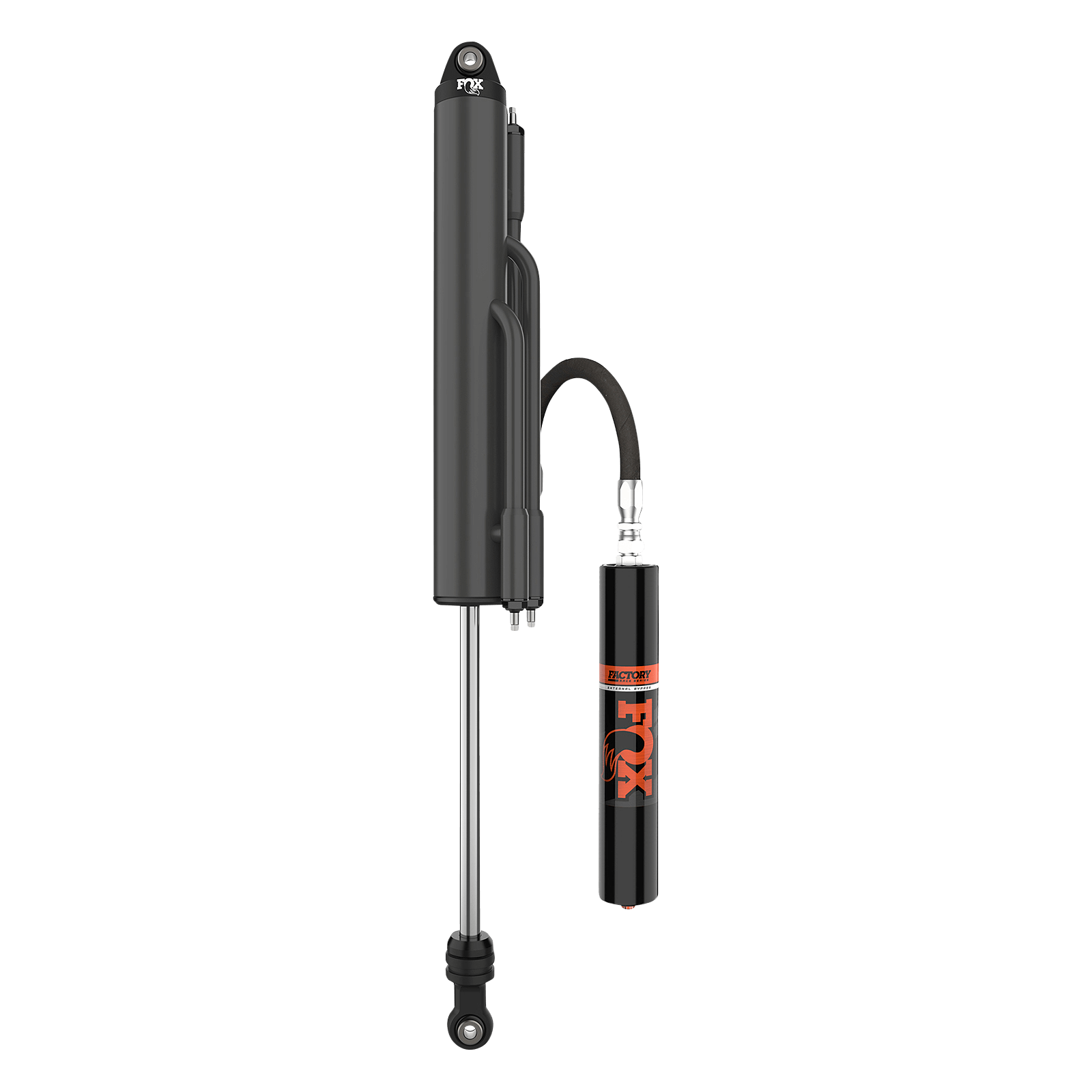
Compression and rebound tubes do different jobs
FOX’s bypass technical manual identifies direction-specific circuits. The external check valves allow a tube to function primarily in compression or rebound depending on the circuit.
That means turning the wrong adjuster because “the truck feels harsh” can make the wrong part of the movement worse.
You need to know whether the problem is the wheel moving into bump or the chassis recovering afterward.
Video helps. Travel sensors help. Shock temperature helps. Driver feedback helps when the question is specific.
Do not confuse position sensitivity with velocity sensitivity
Every conventional race shock already reacts to shaft velocity through the piston and shim stack.
Bypass adds position as another variable.
The shock can be moving at the same shaft speed in two different locations and create a different total damping force because one location has an open bypass path and the other does not.
That is why the same bump can feel different depending on where in travel the truck hits it.
Bottom-out control is built into the travel strategy
FOX explains that bypass shocks are typically tuned to increase damping force deeper in the travel, which reduces bottoming and the load transferred into the bump stops and chassis.
That does not mean the bump stop becomes irrelevant.
The shock and bump stop still have to work together.
If the bypass zone is doing everything and the bump stop is never engaged correctly, the last part of travel may still be ugly. If the bump stop comes in too early, it can create a sudden spring-rate increase before the shock has done its job.

Heat still matters
Bypass tubes do not repeal physics.
The shock still turns motion into heat.
Oil temperature changes viscosity. Repeated impacts can change the feel during a long run. Reservoir volume and fluid condition matter.
That is why off-road race shocks need service, not just adjustment.
A shock that has lost oil, nitrogen pressure or seal condition is not going to be fixed by opening the bypass screw two turns.
Start with the mechanical package before tuning
Check ride height. Check available bump and droop. Check limit straps. Check bump-stop engagement. Check that the shock is not side-loaded through bad mounting geometry.
Then tune.
If the suspension is mechanically running out of travel, no bypass setting can create travel that is not there.
Make one change at a time
This is where teams get lost.
They change bypass, main valving, tire pressure and spring preload between two runs, then say the truck is better.
Maybe.
But nobody knows why.
Change one circuit. Run it. Record it. Look at the same section of track.
That is how a setup notebook becomes useful instead of becoming a list of guesses.
Position-sensitive damping only works if you use the right position
That is the entire point.
The external tubes give the team another layer of control, but they also make setup more dependent on where the shock sits in travel.
Before touching the adjusters, ask where the truck is riding, where it is landing, and which damping zone the piston is actually in when the problem happens.
Then the tubes start making sense.
Sources: FOX: The Difference Between Speed- and Position-Sensitive Damping; FOX Bypass Shock Technical Manual; FOX Factory Race external bypass product documentation.
Photo credit: FOX Factory official product media.
