

Inside Formula E’s Safety Car: Hardware, Radio and Race Control
Safety technology | October 13, 2026
The safety car is the most visible part of a larger system. Warning lights tell the field what is happening, radio links connect the crew to race control, and a defined procedure determines how the racing cars slow down and eventually resume. Formula E provides a useful case study because it can also neutralize a race without sending a physical car onto the circuit.
For the coming season, the reference is the 2026–2027 FIA sporting regulations, published September 30 and applicable from October 1. The photographs here show Porsche’s 2024 Taycan Turbo GT safety-car launch equipment; they are historical illustrations of the hardware.
Lead photograph: the two Taycan Turbo GT safety cars presented in May 2024. Archive press photograph: Porsche AG.
A road car gains a dedicated job
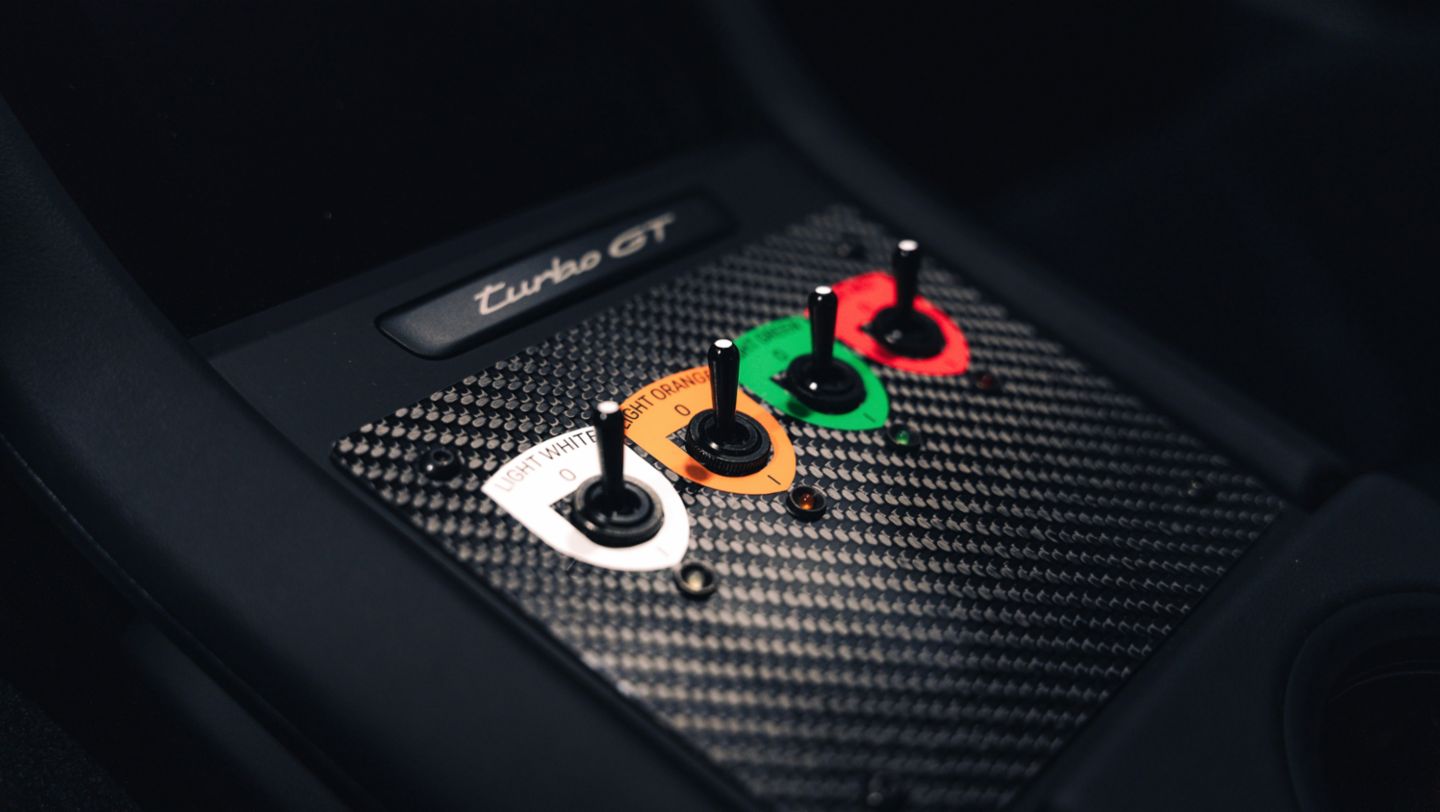
Porsche introduced the Taycan Turbo GT safety cars for the May 2024 Berlin double-header. Manthey handled the necessary modifications and care of the vehicles. Porsche’s launch report identifies warning lights and their electrical installation, communication equipment and fire extinguishers among the changes. Bruno Correia was the designated driver. Source: Porsche’s May 7, 2024 announcement.
The useful detail is the integration. Adding equipment creates a workplace: controls must be identifiable, the crew must be able to communicate, and the car must remain ready for an instruction that can arrive during a live race. The performance of the underlying vehicle is only one part of that assignment.
The crew works with race control
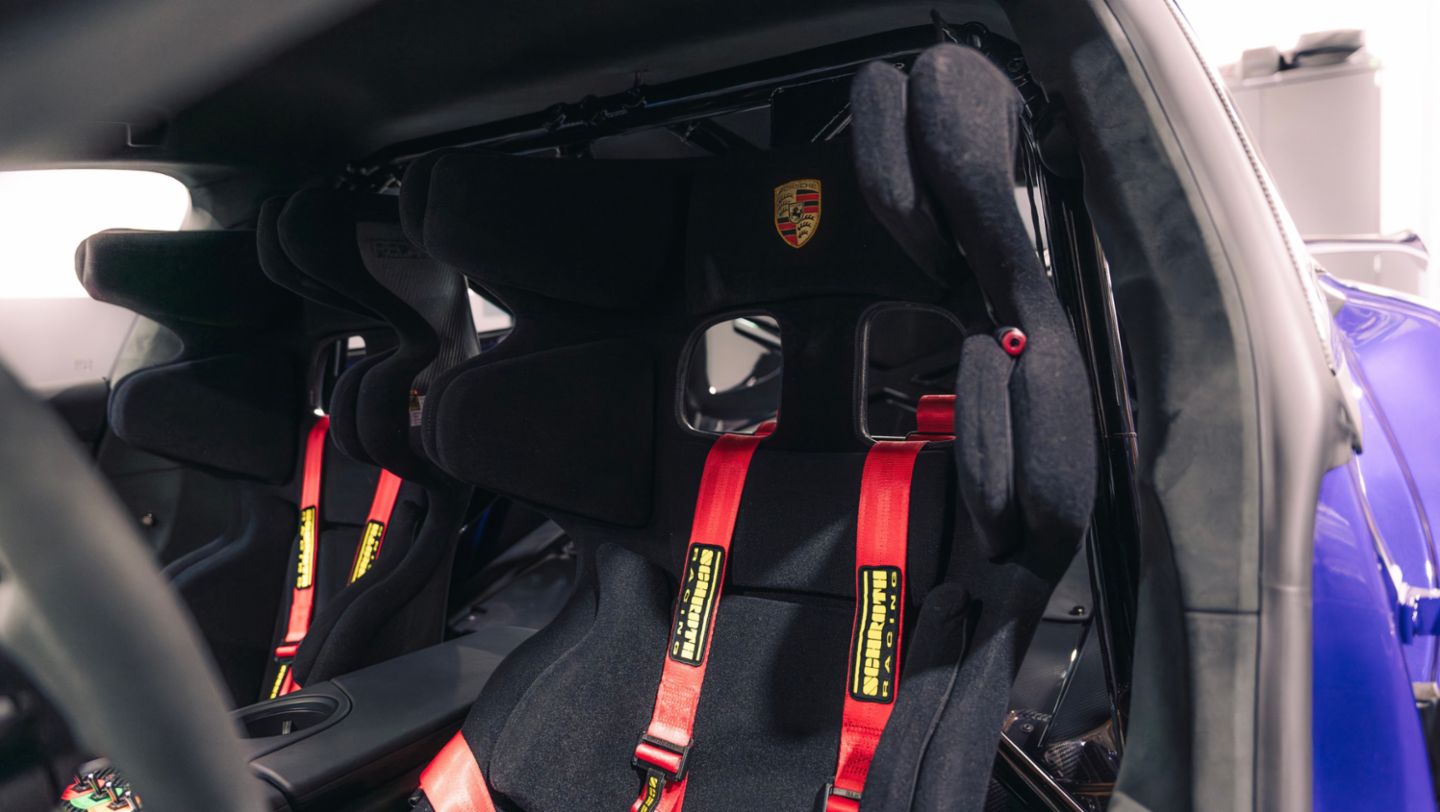
Article 28 requires an FIA-approved driver and observer, with the observer in permanent radio contact with race control. Deployment is ordered by the race director. The field forms behind the safety car, with a maximum ten-car-length spacing. This gives officials a controlled procession while a hazard is addressed.
That physical presence is easy to recognize on television. It also changes what a spectator should watch: the order in which the field collects, the signals from the car and the official messages become as important as the lap-time display.
Full Course Yellow uses a different mechanism
Under Article 29, Full Course Yellow requires cars to slow immediately and reach 50 km/h within five seconds. Race control polices speed rather than the distance between cars; the race director can also authorize a pack-up behind the leader. A five-second countdown precedes the return to green. Source: FIA Articles 28 and 29.
These procedures are more specific than a general yellow-flag warning. Formula E’s official flag explainer distinguishes a single waved yellow, requiring a reduction in speed and readiness to change direction, from double yellow conditions, where the driver must be ready to stop. Those signals concern the hazard ahead; race-wide neutralization adds a coordinated instruction to the whole field.
Read the current procedure with the hardware
The photographs reward a closer look than the usual exterior shot. The cockpit controls explain how a special-purpose vehicle differs from an ordinary car, while the seating shows the crew’s working environment. Neither view explains the whole on-track procedure. That requires the regulations and the instructions issued for the event.
For competitors, the practical lesson is to review their own championship’s neutralization and restart procedures before arriving. For spectators, it is to identify the intervention before interpreting what happens to the race. A safety car and an FCY can both slow the action while asking drivers to do different things.
This is an explanatory case study, not an event-specific driving instruction. Follow the applicable rulebook and race-control directions. All photographs: Porsche AG, May 2024 press imagery.
